The first week is always the same.
You’ve just onboarded a new client. There’s excitement, sure—but underneath it, there’s pressure. A quiet, unspoken countdown has already started.
They’re thinking: “Let’s see if this team is actually worth it.”
You’re thinking: “We need to show something—fast.”
Here’s the uncomfortable truth most agencies won’t say out loud:
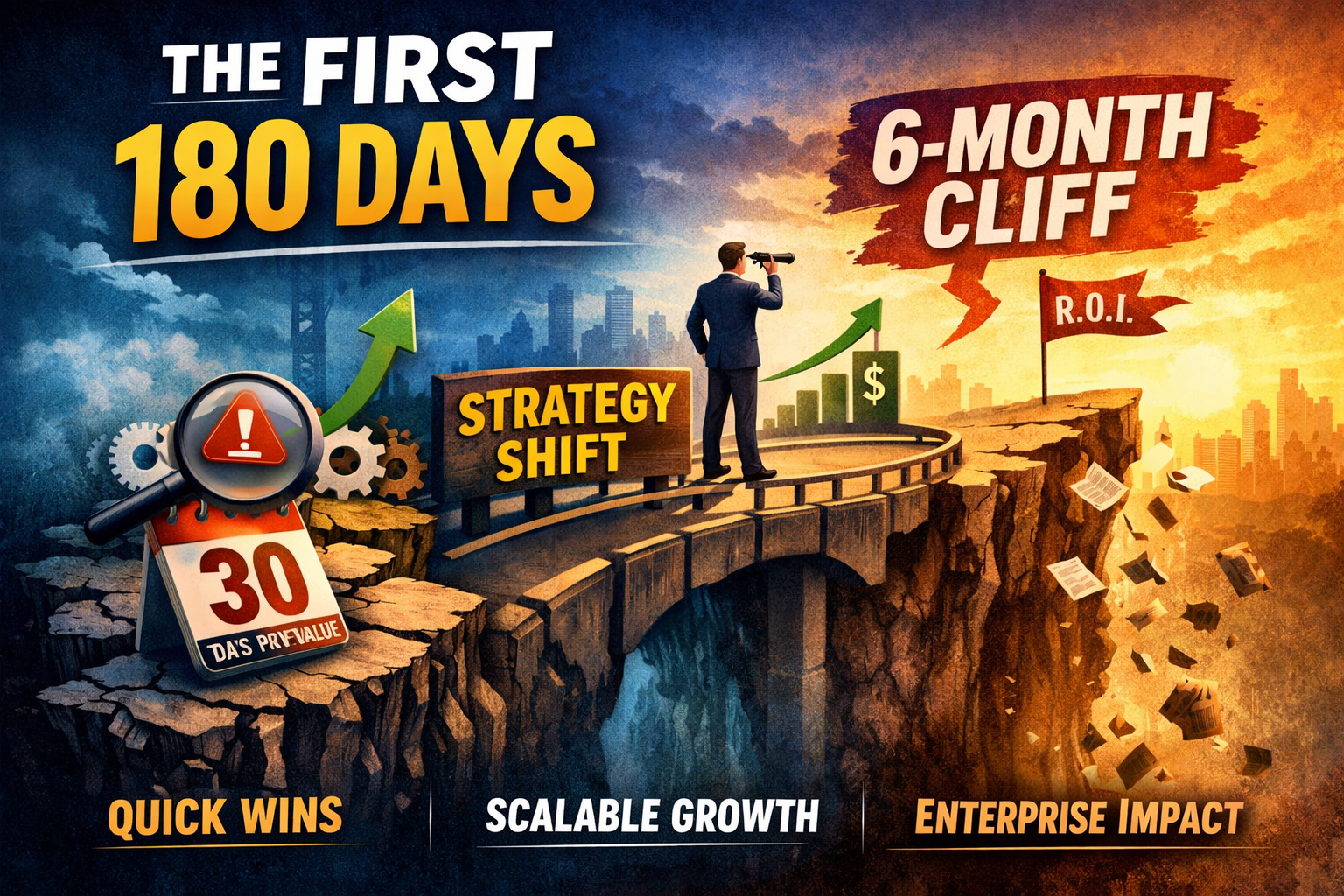
You don’t have six months to prove ROI. You have 30 days to prove you’re not a mistake.
Trust isn’t given anymore. It’s rented. And if you don’t earn it early, you won’t be around long enough to see the long-term results your strategy actually needs.
Phase 1 (Days 1–30): Earn Trust Fast or Lose It Quietly
Let’s define a term that gets thrown around but rarely understood:
A “Quick Win” is not a gimmick.
It’s a low-effort, high-visibility fix that creates immediate, undeniable impact.
Not vanity metrics. Not fluff. Real movement.
What Quick Wins Actually Look Like
Most companies are sitting on obvious inefficiencies—they just don’t see them anymore.
Here’s where we usually find them:
- Leaking conversion funnels
Broken forms. Friction-heavy checkout flows. Pages that load like it’s 2009. - Technical SEO gaps
Indexing issues. Duplicate content. Pages that should rank—but don’t. - Missed intent opportunities
High-impression, low-click queries sitting in Search Console, untouched. - Manual reporting bottlenecks
Teams wasting hours compiling data that should be automated in minutes. - Content decay
Old articles with rankings—but no longer aligned with search intent.
None of these require a six-month roadmap.
They require focus, pattern recognition, and execution speed.
And when done right, they create something more valuable than traffic:
They create belief.
Why This Phase Matters More Than Strategy
Most agencies get this backward.
They start with:
- Long-term roadmaps
- Keyword universe expansions
- 6-month content calendars
All useful. All necessary.
But none of it matters if the client is thinking,
“What exactly are we paying for?”
Quick wins buy you something critical:
Time to do the real work.
If you’re not sure where your quick wins are hiding, that’s normal. Most internal teams are too close to the system to see the leaks.
Need a second set of eyes to spot what’s being missed? Let’s take a look.
Phase 2 (Days 31–90): Don’t Let Momentum Turn Into Distraction
This is where things get dangerous.
You’ve landed a few wins. Rankings tick up. Maybe conversions improve. The client is happier.
And that’s exactly when teams lose the plot.
The Trap: Chasing More Quick Wins
It feels productive. It’s easy to justify.
But here’s the problem:
Quick wins don’t scale. Systems do.
If you stay in “fix mode,” you never transition to “build mode.”
What This Phase Should Actually Look Like
This is the bridge between tactical execution and strategic growth.
Your focus shifts to:
1. Building a Real Content Engine
Not random blog posts.
- Topic clusters aligned with revenue-driving keywords
- Clear search intent mapping
- Internal linking that actually compounds authority
2. Establishing Reporting That Makes Sense
Not vanity dashboards.
- What changed?
- Why did it change?
- What are we doing next?
If your reporting doesn’t answer those three questions, it’s noise.
3. Aligning SEO With Business Outcomes
Traffic is not the goal.
- Pipeline contribution
- Conversion rate improvements
- Revenue per visitor
This is where SEO stops being a marketing channel and starts acting like a growth lever.
The Real Job in This Phase
You’re no longer proving competence.
You’re proving control.
The client should feel like:
- There’s a plan
- The plan is working
- And you know exactly what happens next
If they don’t feel that, doubt creeps back in—fast.
Phase 3 (Before Month 6): Cross the Line From “Fixing” to “Building”
This is the point most engagements never reach.
Not because it’s hard—but because they never built enough trust early to survive long enough.
The 6-Month Cliff Is Real
By month six, every client is asking—directly or not:
“Is this moving the business forward, or just keeping us busy?”
If your work still looks like:
- Fixing errors
- Tweaking pages
- Incremental gains
You’re in trouble.
What Enterprise Value Actually Looks Like
This is where SEO becomes predictable, scalable, and defensible.
You’re now:
1. Forecasting ROI (Not Guessing)
- Traffic projections tied to keyword groups
- Conversion modeling
- Revenue scenarios based on ranking improvements
2. Building Content That Compounds
Not isolated pieces—assets that stack over time.
- Authority pages
- High-intent landing pages
- Strategic link acquisition that reinforces both
3. Owning Market Positioning
You’re no longer reacting to competitors.
You’re shaping:
- What topics matter
- What narratives dominate
- Where attention flows
The Shift That Changes Everything
Early phase: “Let’s fix what’s broken.”
Late phase: “Let’s build something competitors can’t catch.”
That’s the line.
And crossing it is what separates:
- Vendors from partners
- Activity from impact
- Cost from investment
The Reality Most Teams Avoid
You can’t “strategy” your way out of a weak first 30 days.
And you can’t “quick win” your way into long-term growth.
The best systems do both—on purpose.
The 180-Day Survival Checklist
If you want a simple way to pressure-test your SEO and content strategy, use this:
By Day 30:
- ✅ Identified and executed 3–5 meaningful quick wins
- ✅ Demonstrated clear, visible progress
- ✅ Built initial trust with stakeholders
By Day 90:
- ✅ Transitioned from fixes to structured strategy
- ✅ Launched a scalable content system
- ✅ Established clear, decision-driven reporting
By Day 180:
- ✅ Shifted from reactive work to proactive growth
- ✅ Built assets that compound (not reset monthly)
- ✅ Connected SEO performance directly to revenue
If you miss one phase, the next one becomes exponentially harder.
Final Thought (And a Practical Next Step)
Most businesses don’t fail at SEO because the channel doesn’t work.
They fail because:
- They wait too long to show value
- Or they never transition from short-term wins to long-term systems
That gap? That’s where most engagements quietly die.
If you’re tired of waiting six months to maybe see results—or you’re not sure where your Day 1 wins even are—
Let’s audit your current system.
We’ll map out exactly:
- What’s leaking
- What’s working
- And where your fastest path to ROI actually is
No fluff. Just clarity.
Leave a Reply